The United Nations declared 2026 the International Year of the Woman Farmer (IYWF). This provides a timely global platform to recognize, celebrate, and amplify the contributions of women in agriculture.
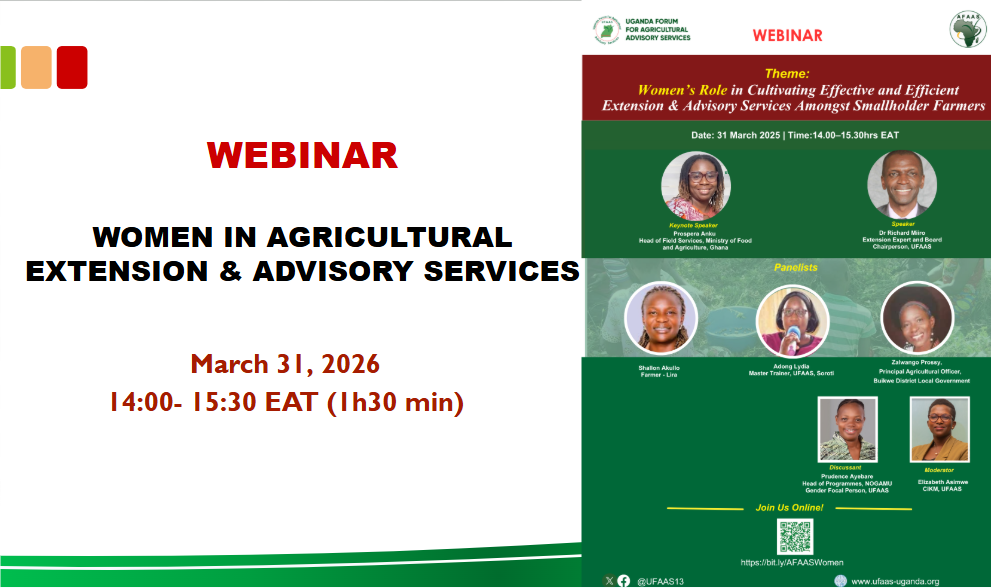
In line with this, and to commemorate International Women’s Month 2026, the Uganda Forum for Agricultural Advisory Services (UFAAS), together with the African Forum for Agricultural Advisory Services (AFAAS), hosted a webinar on the role of women in agricultural extension and advisory services.
Timely to spotlight and celebrate women’s contributions to agricultural extension, the webinar took place on 31st March 2026 under the theme Women’s Role in Cultivating Effective and Efficient Agricultural Extension Services Amongst Smallholder Farmers.
The session brought together participants from across Africa and beyond, including Uganda, Ghana, and Ethiopia, to reflect on how extension services can better serve women and smallholder farmers.
At its core, the discussion focused on building the capacity of both women farmers and extension agents to confidently demand, access, and deliver services that respond to their realities- bringing to life the idea that by “giving” women the tools, voice, and space they deserve, the sector stands to “gain” stronger, more inclusive, and more resilient agricultural systems.
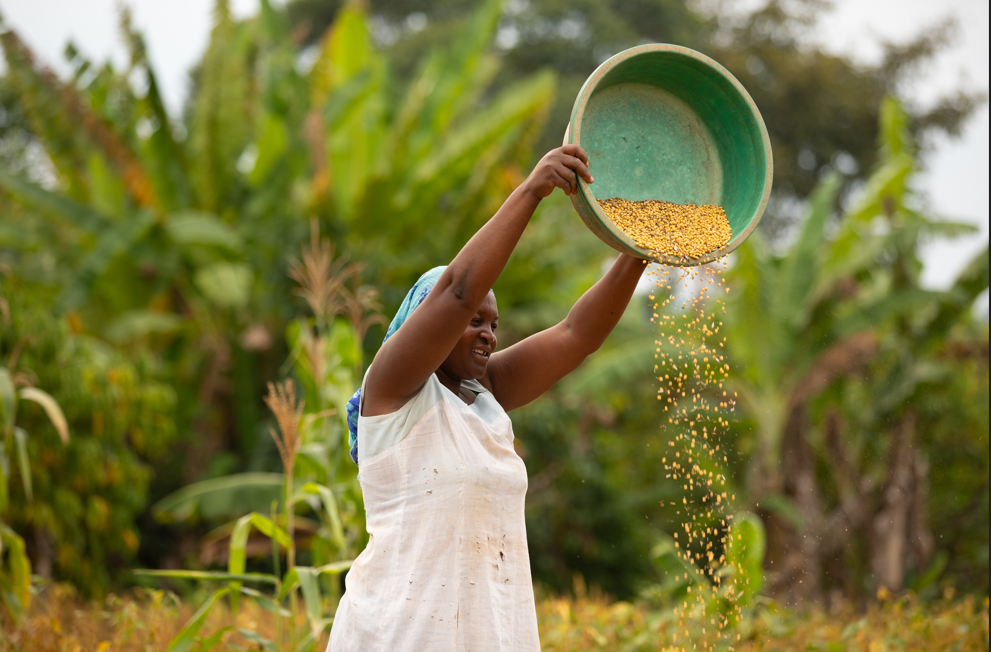
A woman farmer winnowing soybean. Credit @UFAAS
Setting the Stage
In his opening remarks, Dr. Richard Miiro, Board Chairperson of UFAAS, emphasized the urgent need to support women in extension systems. He noted that creating a more enabling environment for both extension providers and farmers is key to improving agricultural productivity and livelihoods.
“We must create a more conducive environment for both extension service providers and the farmers they serve.” he remarked.
Beatrice Luzobe, the Chief Executive Officer of UFAAS, stressed that women play a critical role as custodians of agriculture knowledge. She expressed concern over the low number of women agricultural extension services, noting that their numbers decline even further at higher and managerial levels.
Women as Drivers of Agricultural Transformation
Despite contributing nearly half of the agricultural labor, barriers such gender norms, limited access to land, credit, and information continue to hold them back.
In her Keynote speech, Ms, Prospera Anku, the Head of Field services at Ghana’s Ministry of Food and Agriculture, emphasized that investing in women, through visibility, opportunity, and support, yields powerful returns for agricultural transformation.
She also emphasized the need to “recognize women as central actors rather than passive beneficiaries” in extension services, and called for intentional recruitment of female extension workers, tailoring training programs for women.
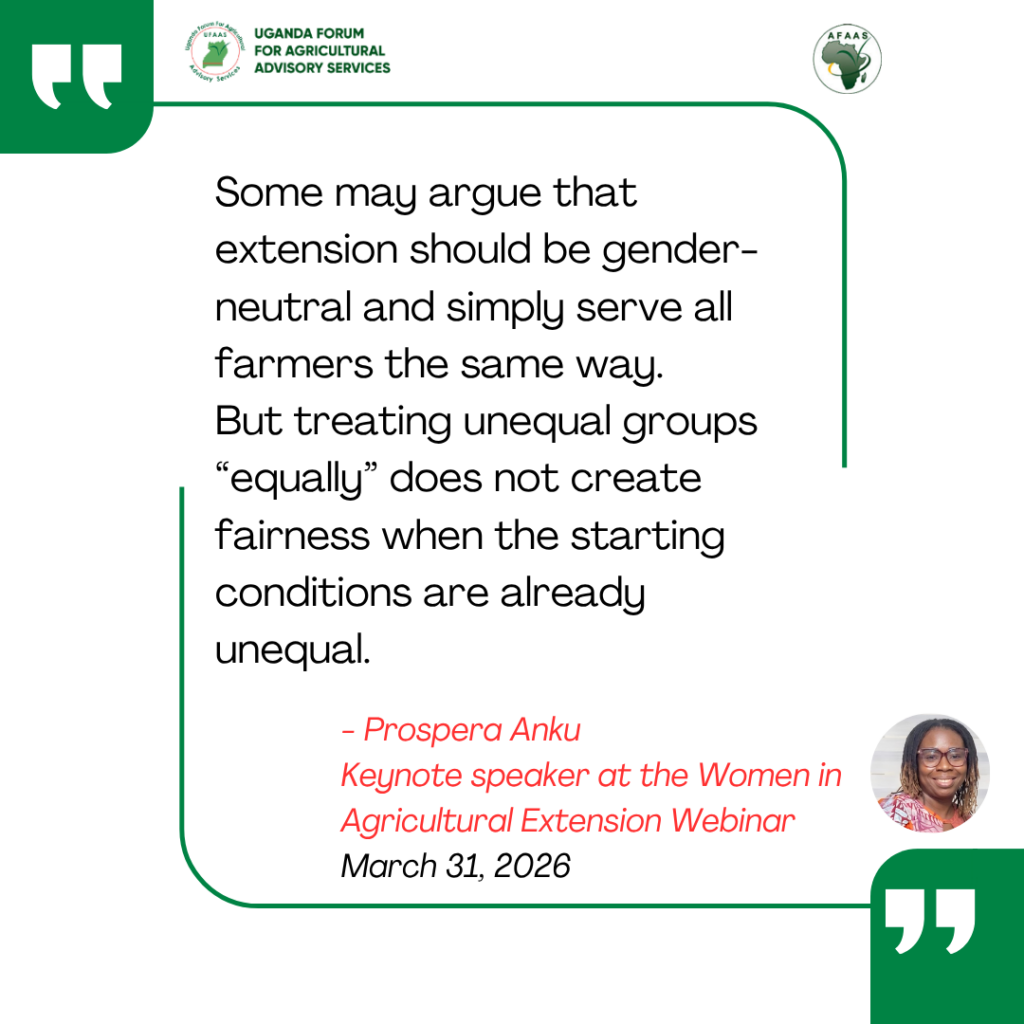
She challenged the audience to rethink assumptions, noting that “treating unequal groups equally does not create fairness and challenged participants to rethink how extension services are designed.
“If extension services are not designed with women in mind, they will continue to exclude them.”
Voices from the Field
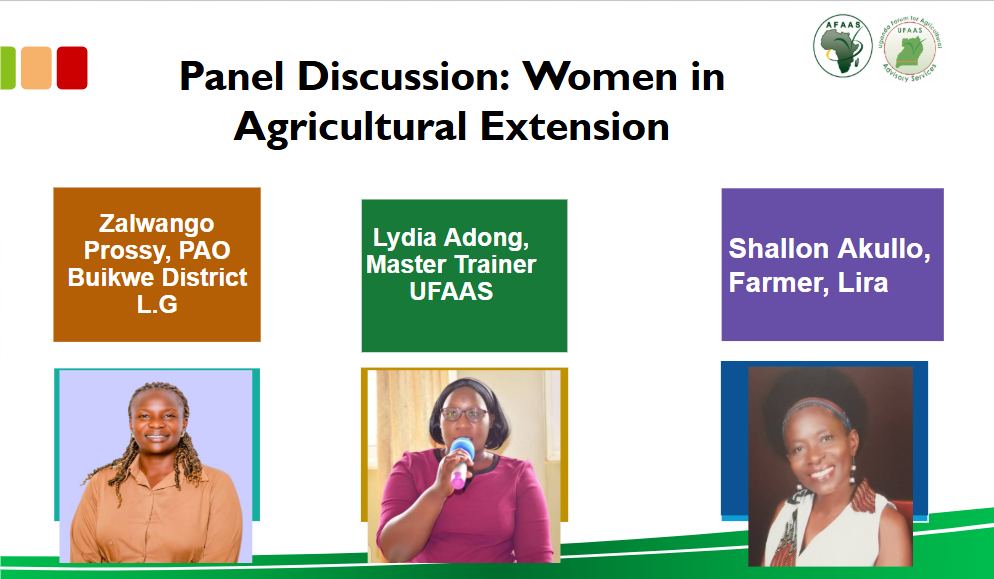
A panel discussion featured powerful personal stories from women in extension and farming. Panelists reflected on their motivations for pursuing careers in agricultural extension, shared practical experiences from the field, and explored how engagement with extension services may differ between men and women. They also discussed strategies they use to build trust with farmers, particularly in communities where gender norms can influence interactions. their inspiration in agricultural extension.
Ms Proscovia Zalwango Kyasanga, a Principal Agriculture Officer in Buikwe District Local Government shared her journey on how was was inspired to study agriculture after missing her first choice degree in medicine, the challenges she faces as a woman extension worker -from societal pressures to limited resources and social cultural mobility constraints, and strategies she employs to build trust with farmers.
“Working in extension as a woman requires resilience, especially when resources are limited.”
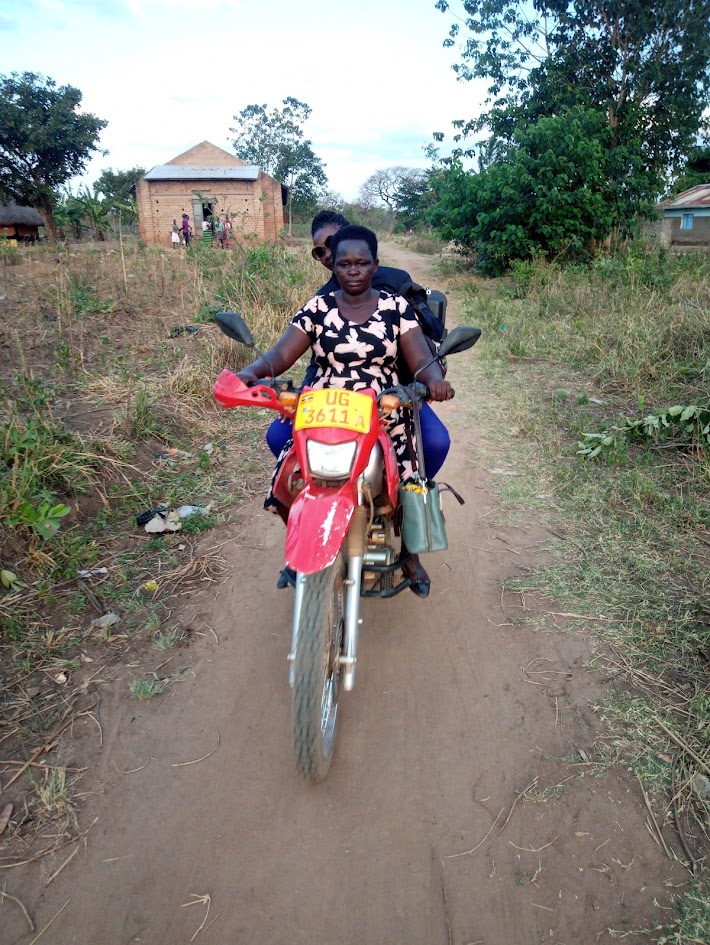
A Rural Advisory Services Facilitator. Credit @Moses Ogwal
” Culturally, women do not ride motorcycles here. At first, I did not know how to ride a motorcycle, and I used to spend more money to hire a rider”
“In most cases, women often hold back during trainings, especially when men dominate the conversation,” said Proscovia.
Ms Lydia Adong, a master trainer of the Global (GPSAEP) under UFAAS, reiterated related challenges around mobility. She highlighted the strong participation of women in farmer training programs in Eastern Uganda, and noted the need to create safe spaces for women to engage more confidently. She shared about the Farmer Family Learning Approach, an approach that the her project uses to ensure all the member of the household are engaged.
From the farmer’s perspective, Ms Shallon Akullo, a mixed enterprises farmer from Lira, spoke about the difficulty of accessing extension services.
“Sometimes the information is not there when we need it, and extension workers are hard to reach.”
From the webinar, women in extension often face additional constraints arising from entrenched social norms, which can limit their effectiveness and opportunities in the field. Many women farmers are willing to learn but face barriers such societal barriers, fear of judgment, limited access to information, and complex information that is hard to understand and use on the farm.
Ms Prudence Ayebare, the UFAAS Gender Focal Person, implored researchers to share evidence on women in agriculture, and how digital extension can be harnessed to enhance effective and efficient service delivery to women farmers.
What Needs to Change
Participants suggested several avenues to enhance women’s engagement with extension services, noting that this would require multiple actors, working together. The avenues include: using participatory and inclusive training approaches, building trust with farmers, involving entire households in extension interventions, with special targeting for women, strengthening partnerships to scale successful models, and improving data collection on women in agricultural extension. “Good practices of women engagement with extension exist, but they are not being implemented at scale”.
Full Recording for the webinar
Compiled by Elizabeth Asiimwe
For correspondence, please contact Beatrice Luzobe on ufaas2013@gmail.com
Credit: @UFAAS