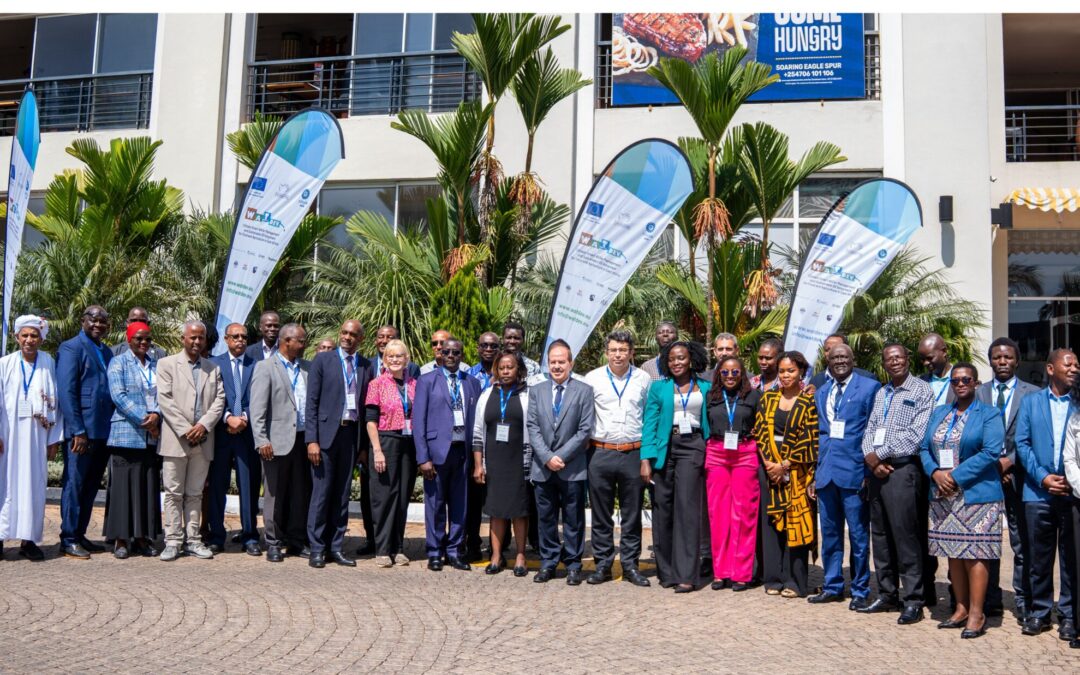
16 June 2026 | Nairobi, Kenya
Building resilient agricultural systems in Africa requires connecting scientific evidence, local knowledge, strong institutions, farmer-centered approaches, effective extension and advisory systems, inclusive partnerships, data, modeling, and evidence-based planning, and long-term investments in water and soil management. These are some of the highlights from stakeholders who participated in the WATDEV International Conference 2026.
Held under the theme “Integrating Grassroots Knowledge and Research into Water and Soil Management in Africa”, the WATDEV conference was convened by the Association for Strengthening Agricultural Research in Eastern and Central Africa (ASARECA) and the Kenya Agricultural and Livestock Research Organisation (KALRO) on 15-16 June 2026 in Nairobi, Kenya and virtually. It was supported by the WATDEV (Climate Smart WATer Management and Sustainable DEVelopment for Food and Agriculture in East Africa) Initiative.
The international hybrid conference brought together over 70 policymakers, researchers, development practitioners, farmers, and regional institutions to discuss how successful water and soil management innovations can move beyond pilot projects and become part of national development strategies to strengthen the resilience of agro-ecosystems to climate change in Africa.
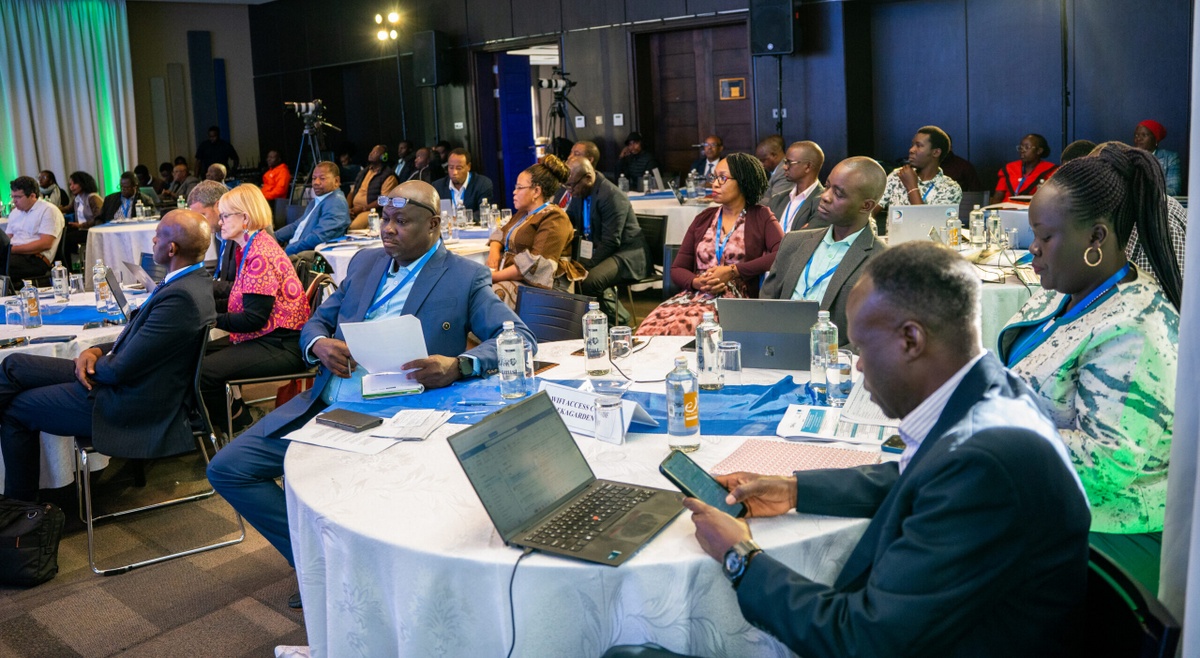
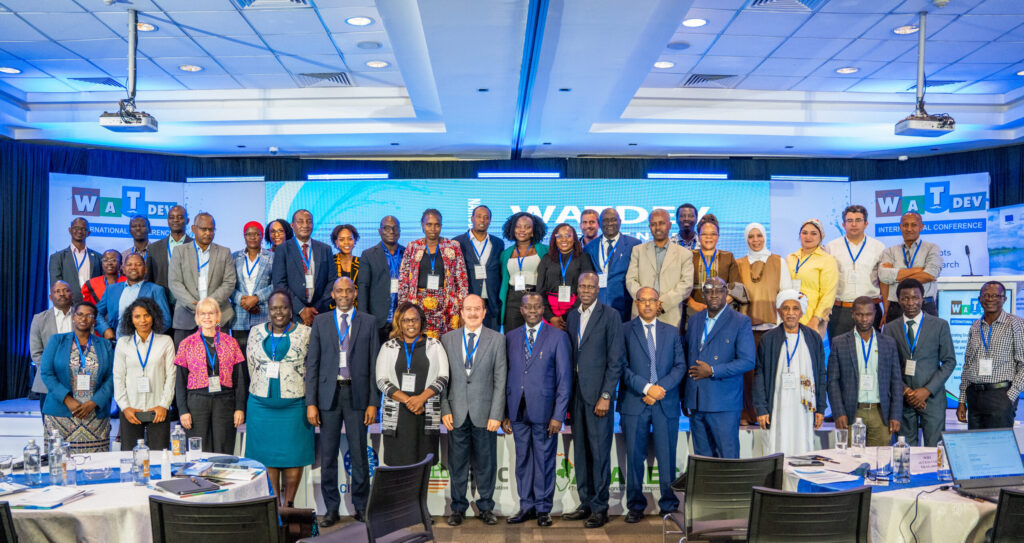 Participants of the WATDEV conference
According to Moses Odeke, WATDEV Project Coordinator and Programme Officer in charge of Monitoring and Evaluation at ASARECA, the event was also an opportunity to take stock of the outcomes of the WATDEV initiative, as well as other initiatives carried out by DeSIRA and other African Union-European Union agricultural programs in research and innovation in Africa. This, he said, was to build synergies complementarities in implementation of future follow-up actions.
The WATDEV project focused on generating and promoting practical, evidence-based water and soil management solutions to maximise agricultural productivity, reinforce climate resilience, and improve food security across seven irrigation schemes in Kenya, Morocco, Sudan, Egypt, and Ethiopia.
Bridging research and grassroots knowledge for climate resilience
In his welcome address, Dr Sylvester Baguma, the ASARECA Executive Director, emphasized that sustainable solutions to Africa’s water, soil, and food security challenges emerge when scientific research is combined with local knowledge. He noted that the WATDEV project successfully demonstrated this approach by validating best management practices in water and soil management with communities, applying eco-hydrological modeling, and facilitating policy dialogue to support climate-smart agriculture.
“Research cannot live in an ivory tower, and grassroots knowledge cannot remain isolated in the field. True climate-smart innovation happens at the intersection of both.” he remarked.
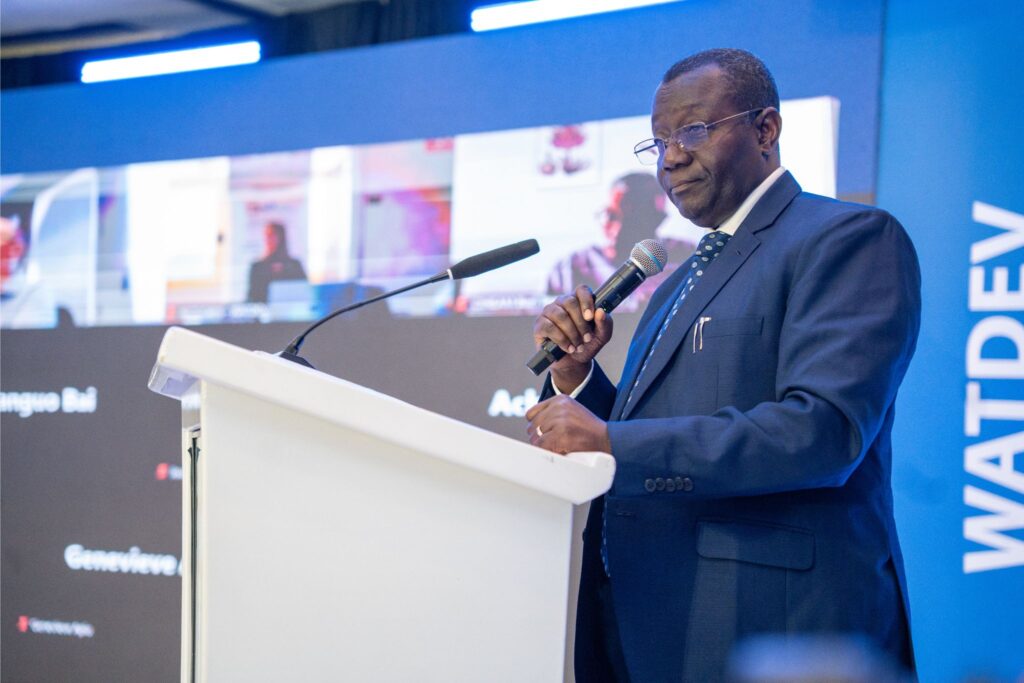
Dr Sylvester Baguma, ASARECA Executive Director
Move from project success to regional scaling and institutional integration
Dr Baguma also called for moving beyond project implementation towards long-term institutional integration and regional scaling of proven solutions. He stressed the need to operationalize WATDEV tools and lessons learnt over the four years, ensuring that successful experiences from countries such as Kenya, Ethiopia, Egypt, and Sudan continue to inform policy, planning, and sustainable agricultural development long after the project’s conclusion.
He intimated that the four-year-long WATDEV collaborative effort to understand water-agriculture system dynamics evolved into a vibrant network of researchers, policymakers, institutions, and communities working together to address some of the most pressing challenges facing Africa: climate change, water scarcity, land degradation, and food insecurity.
“We cannot transform African agriculture without fundamentally transforming how we manage our water, soil, and energy,” he remarked.
Governance is key for building climate resilience: Keynote speaker
According to Dr Victor Ongoma, an Assistant Professor at Mohammed VI Polytechnic University in Morocco, and one of the Keynote speakers at the conference, Africa is already experiencing the impacts of climate change. This is due to rising temperatures, erratic rainfall, droughts, floods, and land degradation.
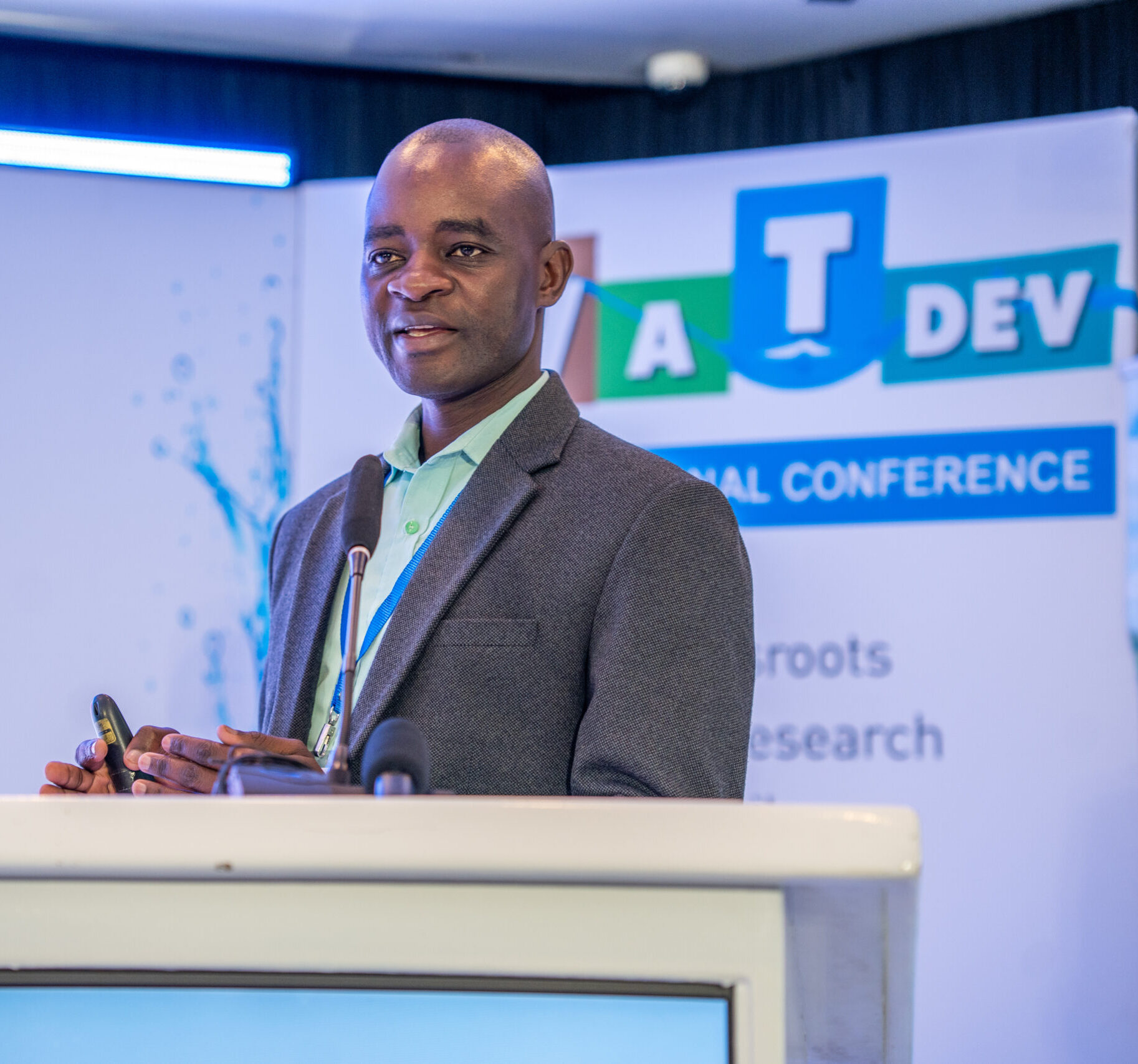
Dr Victor Ongoma, Keynote Speaker
He said that while many climate adaptation technologies exist, their effectiveness depends on strong institutions, coordinated policies, climate information systems, and investments in resilience, noting that climate resilience is as much a governance challenge as it is a scientific one.
“Building resilience requires strengthening both the technical and governance capacities of countries and communities,” he remarked.
Integration of farmer perspectives critical for sustainable land management
In her keynote remarks, Dr. Maria José Márquez from the Universidad Autónoma de Madrid, indicated that scientific evidence alone is not enough to drive the adoption of sustainable land management practices. According to her, farmers make decisions based on profitability, risk, labor requirements, water availability, and livelihood needs. She advised that successful policies and interventions must therefore align scientific recommendations with farmers’ realities and priorities.
“Farmers are more likely to adopt sustainable land management practices when they perceive a plot as worth investing in.” said Dr Márquez.
“Technology is not the problem, scaling is”: AFAAS E.D calls for stronger extension systems
If Africa is to build climate-resilient food systems, the continent must stop treating extension services as an afterthought and start recognizing them as a critical driver of agricultural transformation.
This was one of the messages delivered by Dr. Lilian Lihasi, Executive Director of the African Forum for Agricultural Advisory Services (AFAAS), at the Conference.
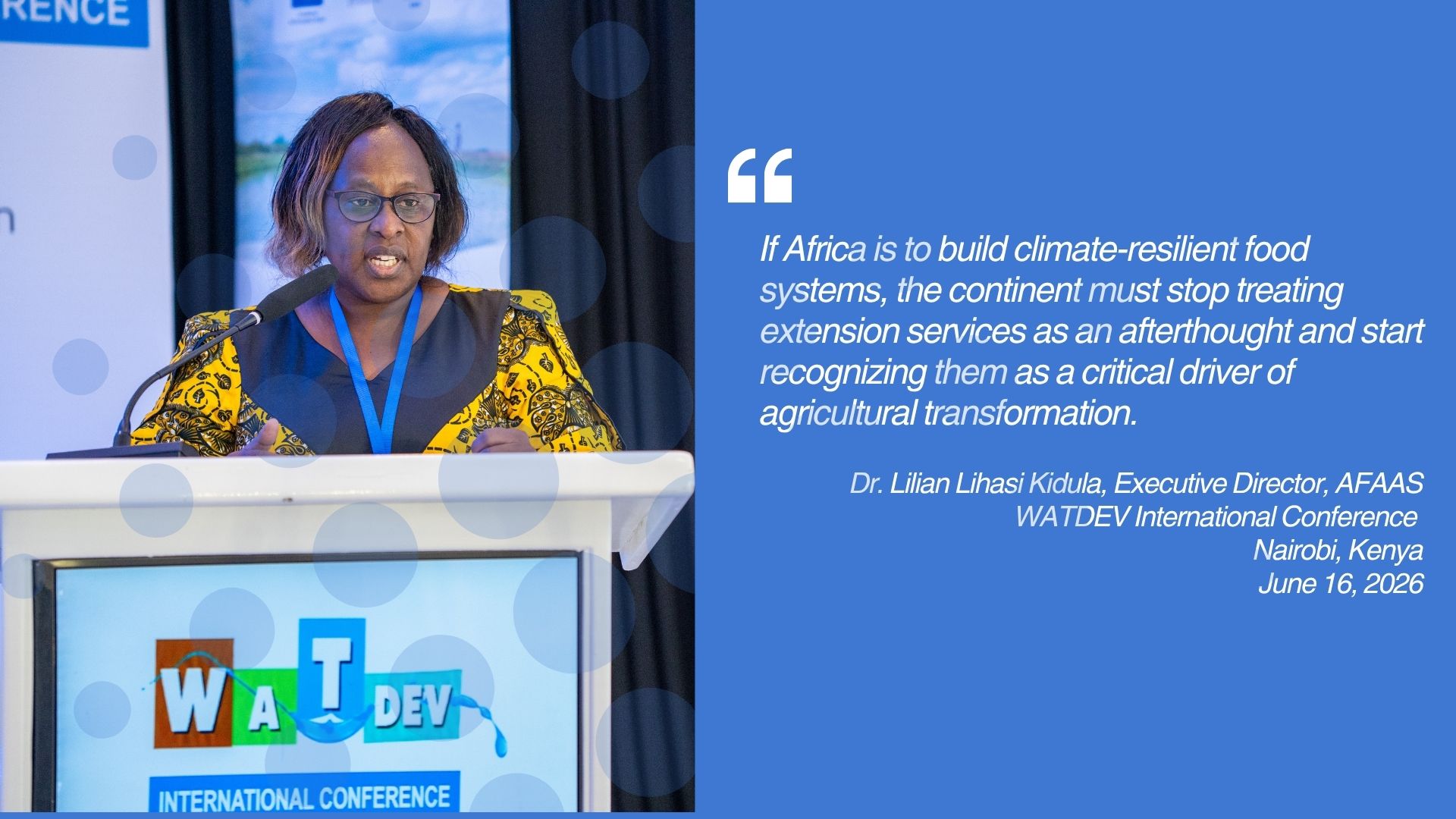
Speaking at the high-level panel discussion on policy uptake & institutional integration- climate adaptation strategies, food security planning, Dr Lihasi called for inclusion and strengthening of agricultural extension systems, questioning why many innovative technologies are yet to scale out.
If we already have the technologies, why are they not reaching enough farmers? “Technology is not an issue. The issue is the scaling of this technology,” she retorted.
Across Africa, researchers, governments, and development partners have invested heavily in generating innovations, best management practices, and climate-smart technologies. Yet many of these solutions remain confined to project sites long after evidence of their effectiveness has been established. According to Dr. Lihasi, the problem is not a lack of innovation but a weak connection among research, policy, and the farming communities expected to use those innovations.
She argued that extension and advisory services are uniquely positioned to bridge this gap by translating research findings into practical knowledge that farmers can understand, test, adapt, and adopt. She concluded with a call for greater investment in extension systems, knowledge management, and climate resilience.
Other panelists included Prof. Wole Fatunbi (FARA), Prof. Jean Jacques Mbonigaba (AGRA), Prof. Alaa Elbably from Egypt’s Ministry of Agriculture, and Hon. Ato Abebe Tewachew (Government of Ethiopia)- online. The discussion moderated by Ayman Ayad of the European Union Delegation in Cairo.
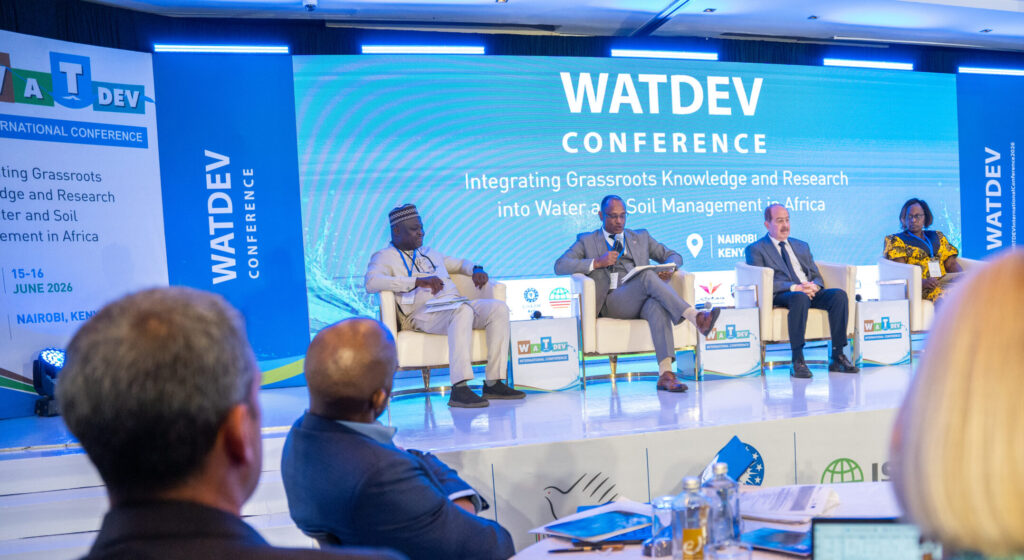
Above: Panelists of the High-Level panel discussion on Climate adaptation strategies, food security planning
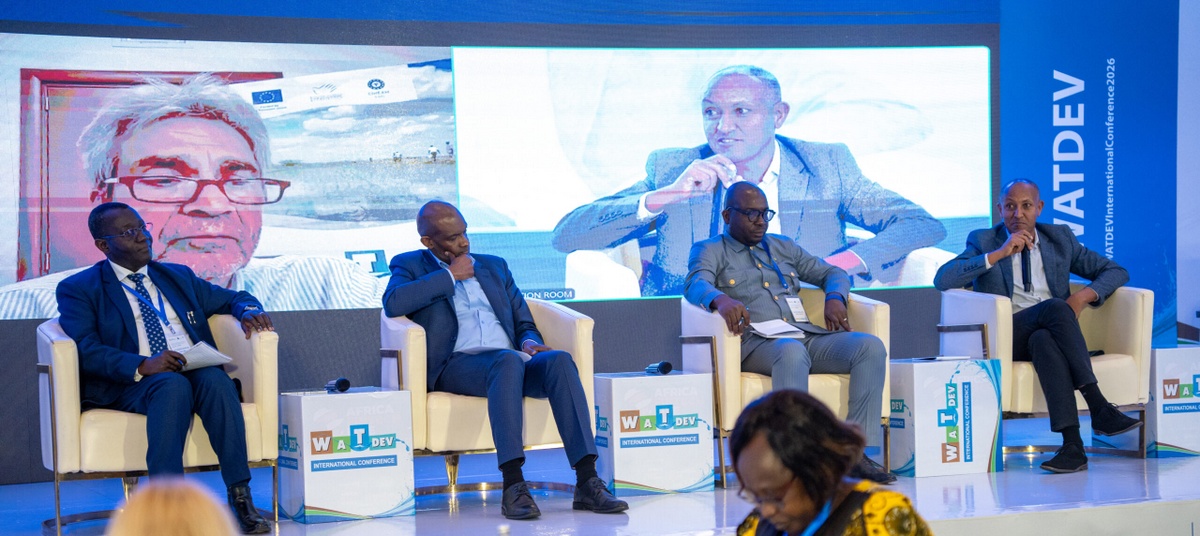
Above: Panelists for the panel on Use of scenario modelling in basin-scale planning, cross-border data exchange. L-R: Sylvester Dickson Baguma (ASARECA), Aggrey Agumya (FARA), Komla Kyky Ganyo (CORAF), Ermias BETEMARIAM (ICRAF), Sherif Mohamady (NWRC) (online). Moderated by Claudio Bogliotti (CIHEAM Bari).
Next steps: Water and Soil management is everyone’s business
As climate change intensifies pressure on Africa’s agricultural systems, speakers emphasized that soil and water management can no longer be viewed as short-term projects or isolated interventions. Instead, they must be recognized as strategic, long-term investments that underpin food security, climate resilience, and sustainable livelihoods. The conference underscored that governments, researchers, extension services, development partners, the private sector, and farming communities all have a critical role to play in scaling solutions, strengthening institutions, and ensuring that proven innovations reach the people who need them most.
There was strong emphasis on scaling proven innovations through sustainable financing mechanisms, stronger policy implementation, improved data and decision-support systems, strengthening multi-stakeholder partnerships; enhancing extension and advisory services, support for farmer-led innovation; and the integration of water, soil, climate, and farming-system approaches within broader landscape management frameworks, and continued capacity development for farmers, researchers, and institutions.
Stakeholders also committed to ensuring that the knowledge, tools, partnerships, and lessons generated through WATDEV continue to inform policy, guide investments, and support climate-resilient agricultural transformation across Africa.
AFAAS network represented
At the WATDEV conference, the AFAAS network was represented by the AFAAS Secretariat (Dr Lilian Lihasi and Dr Karen Munoko), and the Uganda Forum for Agricultural Services (Dr Richard Miiro and Elizabeth Asiimwe), who participated in various segments of the conference.
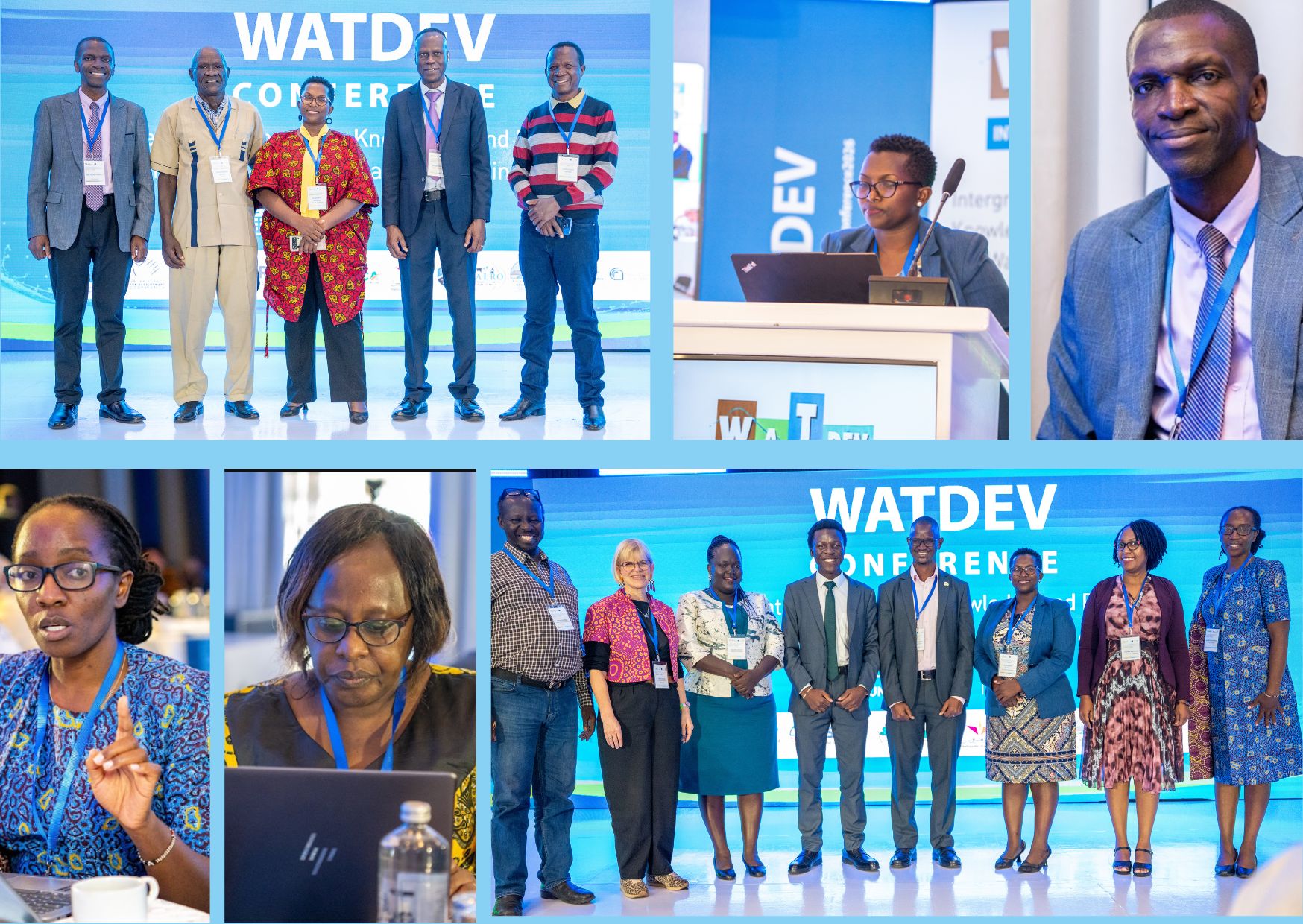
AFAAS representatives interacted with various participants and participated in several segments of the conference.
UFAAS Board Chairperson Dr Richard Miiro shared his impressions and take-aways from the WATDEV International Conference, and their relevance with agricultural extension.
Water and soil management is important
Landscape approach to water and soil management
A business case is critical for scaling of water and soil management innovations.
About UFAAS
The Uganda Forum for Agricultural Advisory Services is a professional organisation for Agricultural Advisory and Extension Services (AEAS) actors in Uganda. It is the Uganda country chapter of the Africa Forum for Agricultural Advisory Services (AFAAS) and the Global Forum for Rural Advisory Services (GFRAS). UFAAS was launched in May 2011, and registered in 2013, as a forum that brings together a broad range of actors in AEAS from all sectors which include the Public Sector, Academia, Private Sector, Civil Society, Farmer Organizations, Donor Community, and the Media within the country. It works closely with the Ministry of Agriculture, Animal Industry and Fisheries (MAAIF) and other like-minded partners.
- Vision: “Professional AEAS effectively driving the agricultural revolution in Uganda.
- Mission: “Promote strategic partnerships, advocacy, capacity building, information sharing and interaction among AEAS actors in Uganda.”
- Guiding principles: Environment Sustainability; Resilient Agriculture; Agro-bio-diversity; Gender-responsiveness; Business Orientation and Economic Feasibility; and Nutrition Sensitivity and farmer-centeredness.
- Strategic objectives of UFAAS:
- To strengthen and sustain an effective platform for pluralistic AEAS in Uganda
- To support information sharing and networking among AEAS actors
- To develop the capacity of AEAS systems to provide innovative and business-oriented services along the agricultural value chain.
- To enhance professionalism and ethical conduct in the AEAS systems in Uganda.
- To catalyse strategic engagements and partnerships aimed at fostering a conducive environment for a resilient Agri-food system and inclusive AEAS in Uganda
Website: https://ufaas-ugandacf. org
…End…
Compiled by Elizabeth Asiimwe
Email: alizeff@yahoo.com