
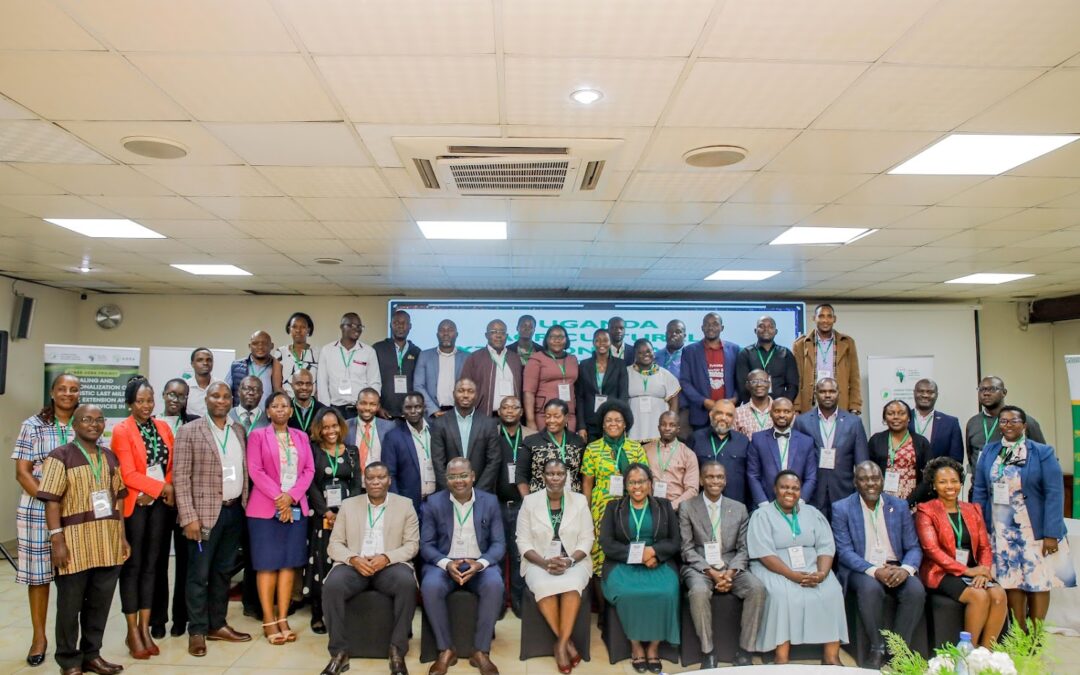
Agricultural extension stakeholders called for urgent reforms to strengthen coordination, professionalism, and systems thinking within Uganda’s Agricultural Extension and Advisory Services (AEAS), following the Uganda Agricultural Extension Coalition Round-Table Policy Dialogue held on 17 December 2025 in Kampala, Uganda.
The high-level Agricultural Extension Coalition round-table policy dialogue was organized by the Uganda Forum for Agricultural Advisory Services (UFAAS) in collaboration with the African Forum for Agricultural Advisory Services (AFAAS) and the Alliance for a Green Revolution in Africa (AGRA), under the theme “Agri-Food Innovation Systems: From Silos to Systems.” The meeting convened senior government officials, academia, private sector actors, civil society, development partners, extension practitioners, and farmers, to reflect on the current status and future of agricultural extension and advisory services (AEAS) in Uganda.
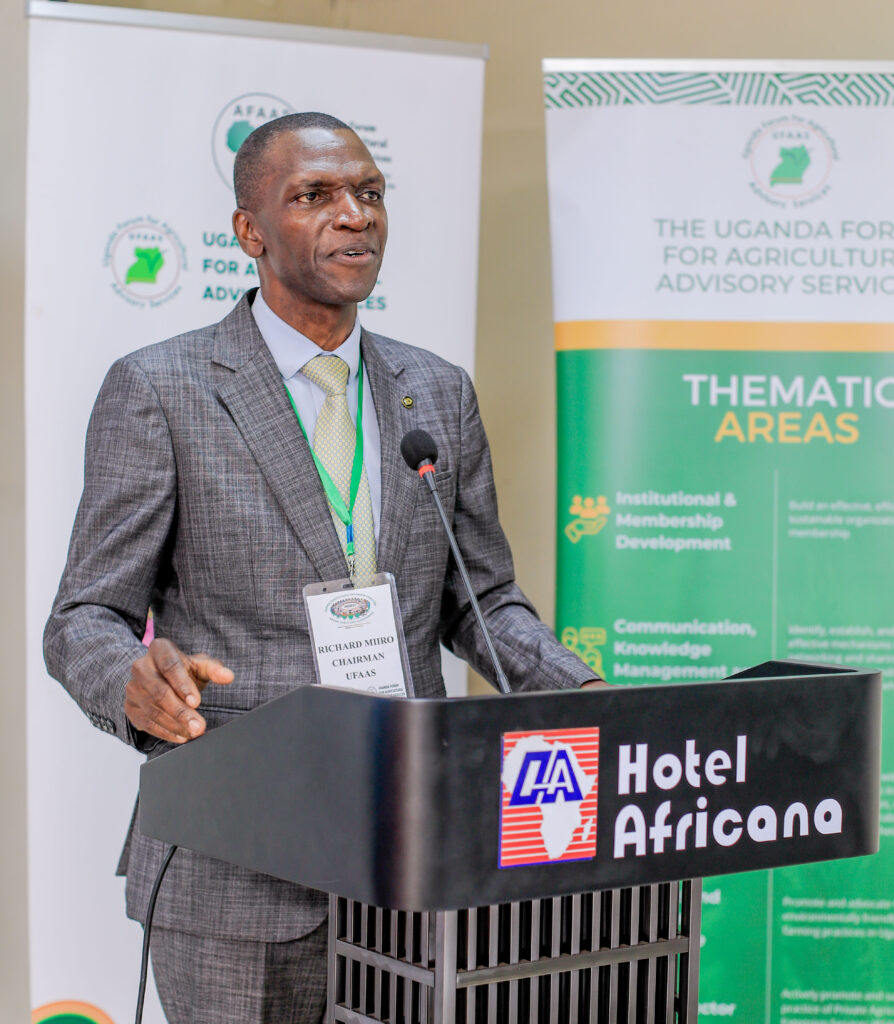
Dr Richard Miiro, UFAAS Board Chairperson
Delivering his welcome remarks, Dr. Richard Miiro, the UFAAS Board Chairperson, welcomed all members and highlighted UFAAS’s strong commitment to convening AEAS actors. He emphasized the importance of the agricultural extension policy dialogue in strengthening Uganda’s extension service delivery system, and expressed appreciation to AFAAS and AGRA for their support toward the successful organization of the event.
Officially opening the dialogue on behalf of the Ministry of Agriculture, Animal Industry and Fisheries (MAAIF), Ms. Jennifer Oyuru, Assistant Commissioner for Agricultural Extension and Skills Management, emphasized that while Uganda has sound extension policies, fragmentation continues to undermine impact.
“We have the National Agricultural Extension Policy and Strategy, but many actors are still working in silos. Without coordination, transparency, and joint planning, our collective impact remains limited,” Ms. Oyuru said.
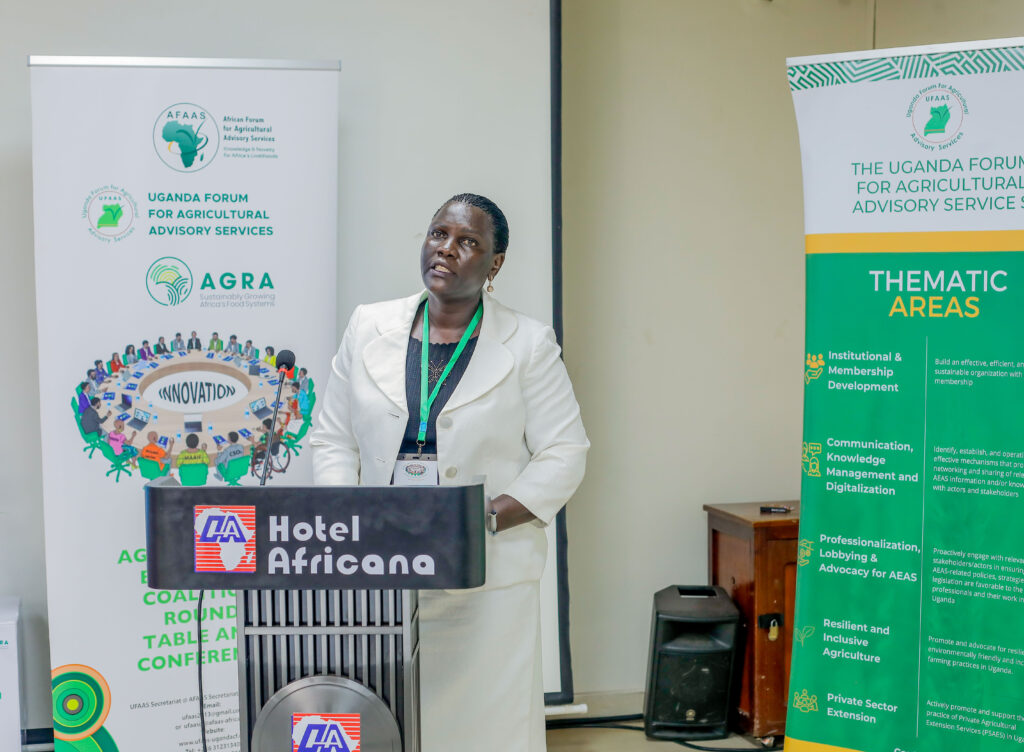
Ms. Jennifer Oyuru, Assistant Commissioner for Agricultural Extension and Skills Management, MAAIF
She further challenged extension actors to critically reflect on their engagement with farmers.
“The real question is whether our farmers – the last-mile beneficiaries-are receiving what they truly need. Extension must return to the field and find out what people need, not just transferring information,” she added
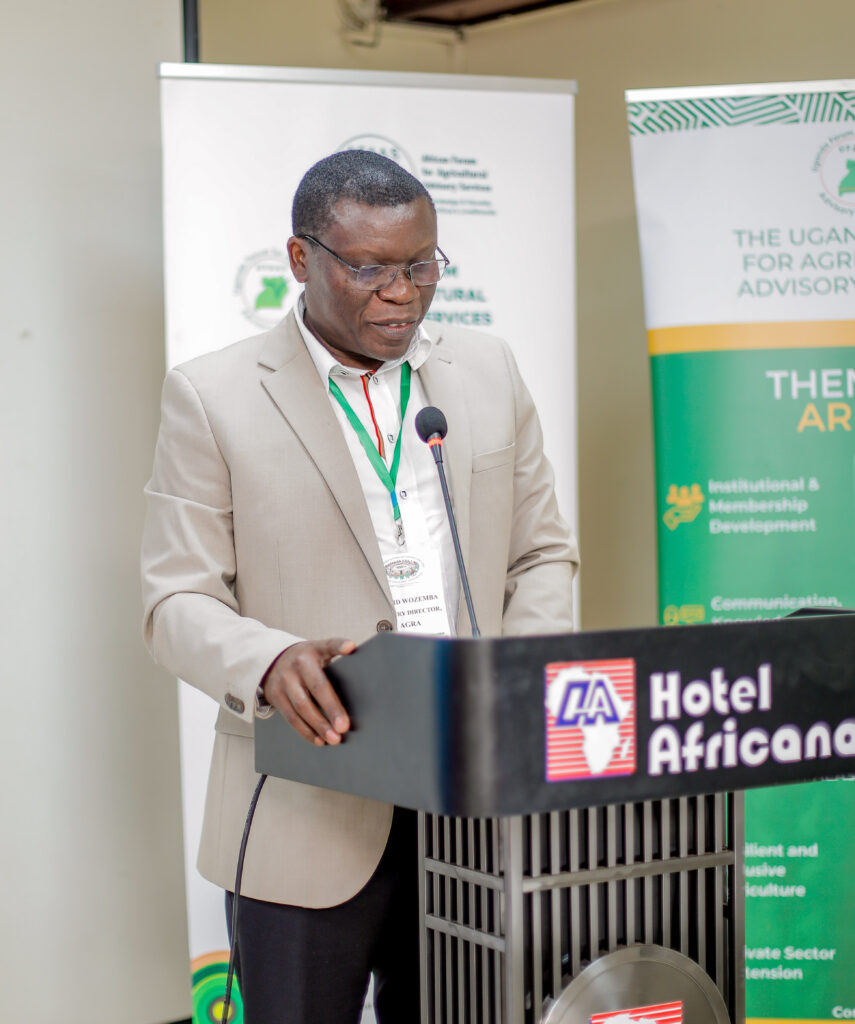
Mr David Wozemba, Country Director, AGRA Uganda.
Mr. David Wozemba, AGRA Uganda Country Director, challenged extension professionals to reconnect with farmers and emphasized that the credibility and future of agricultural extension depend on visible, measurable impact at farm level. He also noted that extension actors must go beyond implementing activities to deliberately demonstrate results that justify sustained public and private investment in extension services.
Importance of Coalitions in Agricultural Extension and Advisory Services:
Speaking on behalf of AGRA, Dr. Noordin Qureish, the Program Specialist for Extension and Capacity building, underscored the urgency of building strong extension coalitions, noting that extension remains underfunded and fragmented across the continent.
“Extension is the engine of smallholder transformation, yet it remains dangerously underinvested. Without a coalition, efforts are duplicated and impact is diluted; with a coalition, solutions can be scaled,” Dr. Qureish said.
Dr Qureish also emphasized that the true measure of extension success lies in farmer-level change, and encouraged actors to employ approaches that enhance no just reach but change at farm level. “The ultimate test is whether the farmer changes, and whether that change spreads to neighboring farmers”, he remarked. Further more, he mentioned the need for partnerships with private sector to enhance sustainability.
In her presentation, Dr. Lilian Lihasi Kidula, Executive Director of AFAAS, called for a fundamental shift from fragmented approaches toward integrated Agricultural Innovation Systems. She noted that when a single component of a system is weak, the whole system malfunctions.
“A system is only as strong as its weakest link. When research, extension, markets, and policy actors operate in isolation, the entire system fails to deliver for farmers,” Dr. Lihasi said
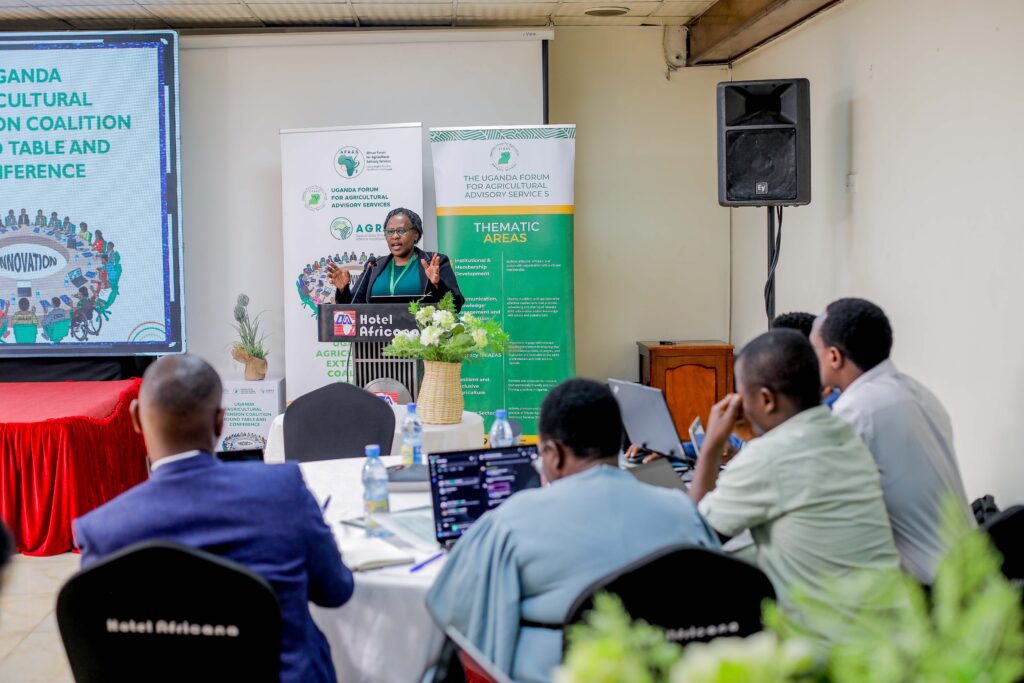
Dr Lilian Lihasi Kidula, AFAAS Executive Director
She also stressed that innovation must be co-created with farmers because farmers are not passive recipients of technology, but central actors in innovation. “Solutions must be developed with them, not for them”, she said.
Best practices and experiences in agricultural extension delivery:
The dialogue featured a high-level panel of experts from academia, agri-tech, research institutions, development partners, and higher education networks. Panelists highlighted the growing role of private sector actors and digital platforms in extension delivery, while cautioning that quality assurance and professional standards must be strengthened.
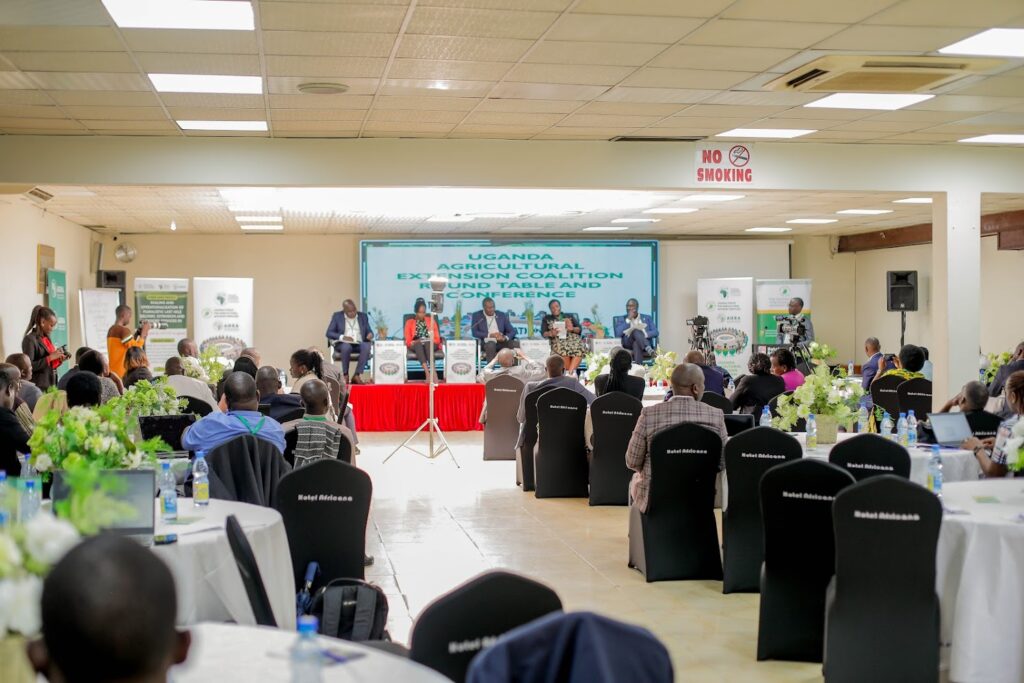
Panel discussion featuring (L-R): Dr. Bernard Obaa – Head of Department, Extension and Innovation Studies, Makerere University; CEO, WestNile Foresters; Ms. Zilla Arach Mary – Co-founder and Chief Product Officer, EzyAgric (AgriTech Platform); Mr. Tony Ojok – Livelihoods and Economic Empowerment Lead, World Vision Uganda; Dr. Damalie Babirye Magala – National Agricultural Research Organization (NARO), Mukono ZARDI; Prof. Anthony Egeru – RUFORUM Secretariat. Moderated by Dr. Robert Mulebeke, Kyambogo University.
Participants also engaged in thematic group discussions on coordinating non-state actors, professionalizing extension services, capacity strengthening for the future of extension, leveraging digital tools and artificial intelligence, and aligning extension delivery.
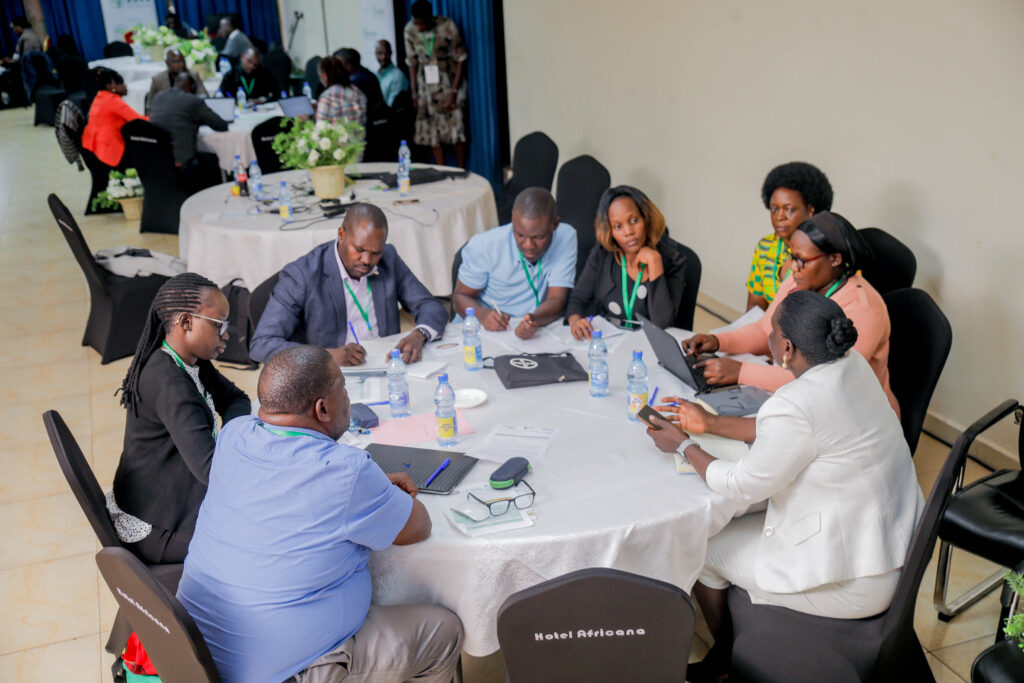
Extension actors during thematic group discussions
Key recommendations from the dialogue included institutionalizing multi-stakeholder extension platforms at national and district levels, operationalizing registration and certification of extension providers, strengthening research–extension–farmer linkages, and accelerating digital transformation while safeguarding quality and accountability
Closing the meeting, Dr. Richard Miiro, Chairperson of the UFAAS Board, called for action beyond dialogue:
“This roundtable should not end here. Transforming Uganda’s extension system requires sustained collaboration, shared responsibility, and commitment to doing things differently,” he said.
Participants agreed that the dialogue marked a significant step toward building a more coordinated, inclusive, and impact-driven agricultural extension system, one capable of supporting Uganda’s agri-food transformation agenda and delivering real change for farmers. The dialogue was officially closed by Dr Joshua Zimbe, the Principal Dairy Production Officer, Department of Dairy Development and Production at the Ministry of Agriculture, Animal Industry and Fisheries.
Event video
Event presentations in this link.
Compiled by Elizabeth Asiimwe.
For more information, contact:
Ms Beatrice Luzobe, CEO, Uganda Forum for Agricultural Advisory Services (UFAAS); Email: ufaas2013@gmail.com